Kundalini for Inner Healing: A Safe and Classical Yogic Path

February 4, 2026

Kundalini awakening is not a future event, and it is not reserved for special people. It begins the moment we start to question our life and our deeper nature:

Who am I?
Why am I living this way?
Is there something deeper?

That very questioning is Kundalini guiding awareness inward. Awakening is not something that happens later — it is always available here and now.

Yet, Kundalini awakening is also one of the most discussed and misunderstood subjects in yoga today. It is often surrounded by fear, mysticism, dramatic experiences, and misinformation. In classical yoga, however, Kundalini is understood in a very different way — as a natural, gradual, and healing inner process.


At Yoganga Healing, we approach Kundalini not as a brand or a force to be awakened forcefully, but as Shakti, the universal life energy that already sustains our body, mind, and consciousness. When the right conditions are created through breath, awareness, and balance, this Shakti supports inner healing, clarity, and spiritual growth.


In this blog, Kundalini is explored from the perspective of classical yogic texts and lived yogic practice, offering a grounded understanding rooted in healing rather than force.


What Is Kundalini According to Classical Yoga?

To understand Kundalini clearly, we must first step away from fear, myths, and exaggerated ideas. In classical yoga, Kundalini is described as universal Shakti — the creative intelligence that sustains all life.

This Shakti is not something outside of us. It is the same energy that:

  • Allows us to breathe naturally
  • Supports digestion and circulation
  • Sustains thought, awareness, and perception
  • Enables growth, healing, and transformation

Kundalini is not inactive or asleep. It is already functioning at every moment of our life. It is described as “dormant” only because we are not consciously participating in its higher potential.

Yoga exists to help us reconnect with this natural intelligence — not by creating energy, but by removing obstacles so that Shakti can express itself more fully and harmoniously.

Kundalini Is Already Working Within You

One of the most important insights from classical yoga is this:

Kundalini is already operational. It is already guiding our biological, emotional, and psychological processes. However, when there is:

  • Constant stress
  • Unresolved emotions
  • Inner conflict
  • Unhealthy lifestyle habits
  • Excessive mental activity

The flow of prana (life energy) becomes scattered and blocked. Yoga practices do not create Kundalini. They remove obstacles so that Shakti can work more completely and harmoniously.

One of the most important insights from classical yoga is this:

Kundalini is already operational. It is already guiding our biological, emotional, and psychological processes. However, when there is:

  • Constant stress
  • Unresolved emotions
  • Inner conflict
  • Unhealthy lifestyle habits
  • Excessive mental activity

The flow of prana (life energy) becomes scattered and blocked. Yoga practices do not create Kundalini. They remove obstacles so that Shakti can work more completely and harmoniously.

Kundalini Is Not a Brand or a Technique

Today, Kundalini is often presented as a specific style or identity. Classical yoga does not support this idea. Kundalini is:

  • Not a workout
  • Not a belief system
  • Not an experience to chase

It is an evolutionary process of consciousness. Traditional texts such as the Hatha Yoga Pradipika, Gheranda Samhita, and Shiva Samhita describe Kundalini as a gradual unfolding of awareness, supported by preparation, discipline, and inner balance.

When Kundalini unfolds naturally, it brings:

  • Calmness
  • Emotional stability
  • Clarity of perception
  • Inner silence
  • A deeper sense of meaning not chaos or disturbance.


Why Kundalini Awakening Is Often Misunderstood

Many people associate Kundalini with sudden emotional release, physical discomfort, or mental imbalance. According to classical yogic understanding, these are not signs of Kundalini awakening.


When energy is forced without preparation, what arises is:

  • Nervous system imbalance
  • Restlessness
  • Anxiety
  • Emotional overload

This is not Kundalini. It is the system reacting to pressure. Classical yoga emphasizes healing before awakening, not intensity.


Inner Healing, Inner Conflict, and the Role of Breath


In yoga, healing and spirituality are not separate. Inner healing is the very foundation of Kundalini awakening.


Unresolved emotions, stored impressions (samskaras), and repetitive mental patterns create leakage of energy. When energy is scattered or blocked, Kundalini cannot rise naturally. This is why classical yoga places healing before awakening.


The purpose of yogic practices is not to force energy upward, but to:

  • Reduce inner conflict
  • Calm the nervous system
  • Heal emotional patterns
  • Restore balance in prana

When these conditions are created, Kundalini begins to support higher awareness safely and naturally.

One of the greatest obstacles to Kundalini awakening is mental duality — the constant conflict of thoughts. Classical yoga teaches that:

  • Fighting the mind strengthens the mind
  • Suppressing thoughts creates tension
  • Chasing silence creates disturbance

As long as the mind remains divided, awareness stays scattered.

When inner conflict settles, awareness naturally becomes still. This inner stillness is what many yogic traditions refer to as Kundalini awakening — expressed through different languages, but pointing to the same truth. The yogic texts also observe a simple and powerful truth:
When the breath moves, the mind moves.
When the breath becomes subtle, the mind becomes subtle.


This is why breath practices are central to the path of Kundalini yoga. Through conscious breathing, we:

  • Calm the nervous system
  • Regulate the flow of prana
  • Reduce mental noise
  • Prepare the body and mind for meditation

Breath is not used to control energy, but to harmonize it. When the breath is balanced and relaxed, the mind naturally follows, creating the inner conditions where healing deepens and Kundalini unfolds on its own.

In this way, inner healing, stillness of mind, and breath awareness are not separate steps — they are one continuous process of awakening.


Pranayama, Kumbhaka, Mudras, and Bandhas

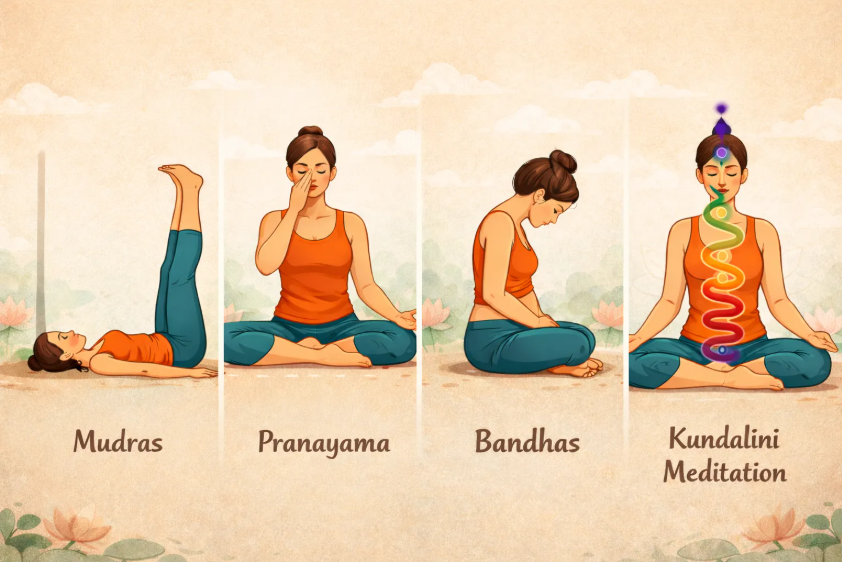
Classical Kundalini practice is not a single technique. It is a complete system. It includes:

  • Pranayama to balance prana
  • Kumbhaka to bring inner stillness
  • Bandhas (energy locks) to guide prana
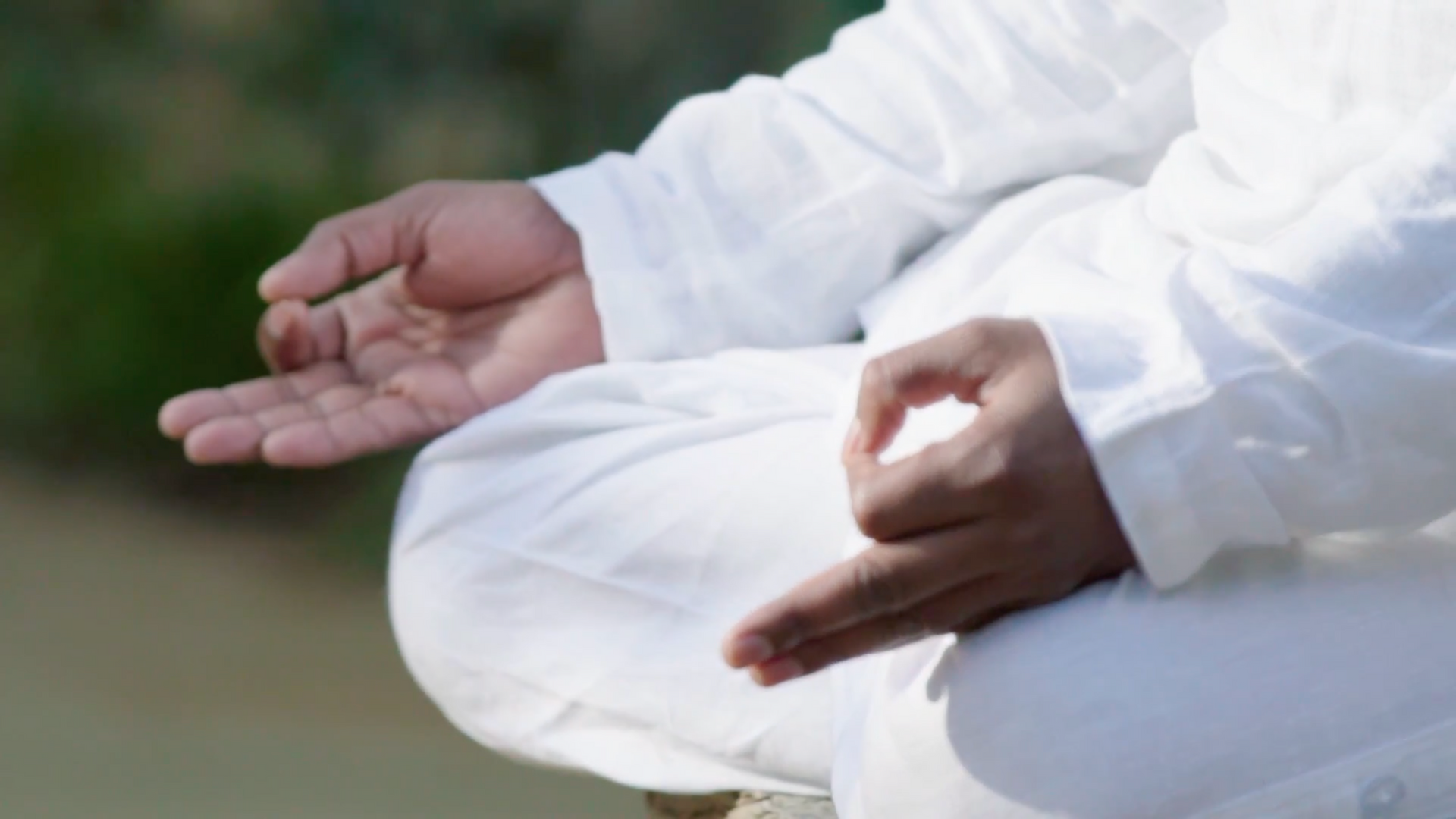
  • Mudras to stabilize awareness

These practices work together to support prana entering the Sushumna nadi, the central energy channel. When prana flows through Sushumna:

  • Duality reduces
  • Awareness becomes unified
  • Healing deepens

Classical Kundalini practice is not a single technique. It is a complete system. It includes:

  • Pranayama to balance prana
  • Kumbhaka to bring inner stillness
  • Bandhas (energy locks) to guide prana
  • Mudras to stabilize awareness

These practices work together to support prana entering the Sushumna nadi, the central energy channel. When prana flows through Sushumna:

  • Duality reduces
  • Awareness becomes unified
  • Healing deepens

Nadis Purification: The Foundation of Safe Kundalini

Classical texts clearly state: as long as the nadis are impure, prana cannot enter Sushumna. If prana does not enter Sushumna, deep meditation cannot happen. This is why traditional yoga emphasizes:

  • Gradual purification
  • Balanced lifestyle
  • Regular practice
  • Relaxation and rest


Awakening is a result of purification, not force.


Ajapa Japa and Soham: The Natural Mantra of Kundalini

One of the most subtle and powerful teachings of Kundalini yoga is Ajapa Japa — the natural mantra of the breath. With every breath:

  • Inhalation naturally sounds So
  • Exhalation naturally sounds Ham


This Soham mantra happens continuously — about 21,600 times a day. When awareness returns to this natural rhythm:

  • The mind becomes quieter
  • Inner healing deepens
  • Awareness stabilizes
  • Kundalini is supported gently

Ajapa Japa is not something we perform. It is something we remember.


Where Is Kundalini Located?

Traditional texts describe Kundalini as resting near the Muladhara chakra, close to the kanda, the root of the subtle energy channels. Some texts describe:

  • Three and a half coils
  • Others mention multiple coils

These descriptions are symbolic, pointing to stages of consciousness, not physical anatomy. The essential understanding remains: Kundalini awakens when awareness awakens.


Kundalini for Inner Healing: A Gentle Practice Approach


We follows a gentle, classical sequence focused on healing rather than stimulation. The practice included:

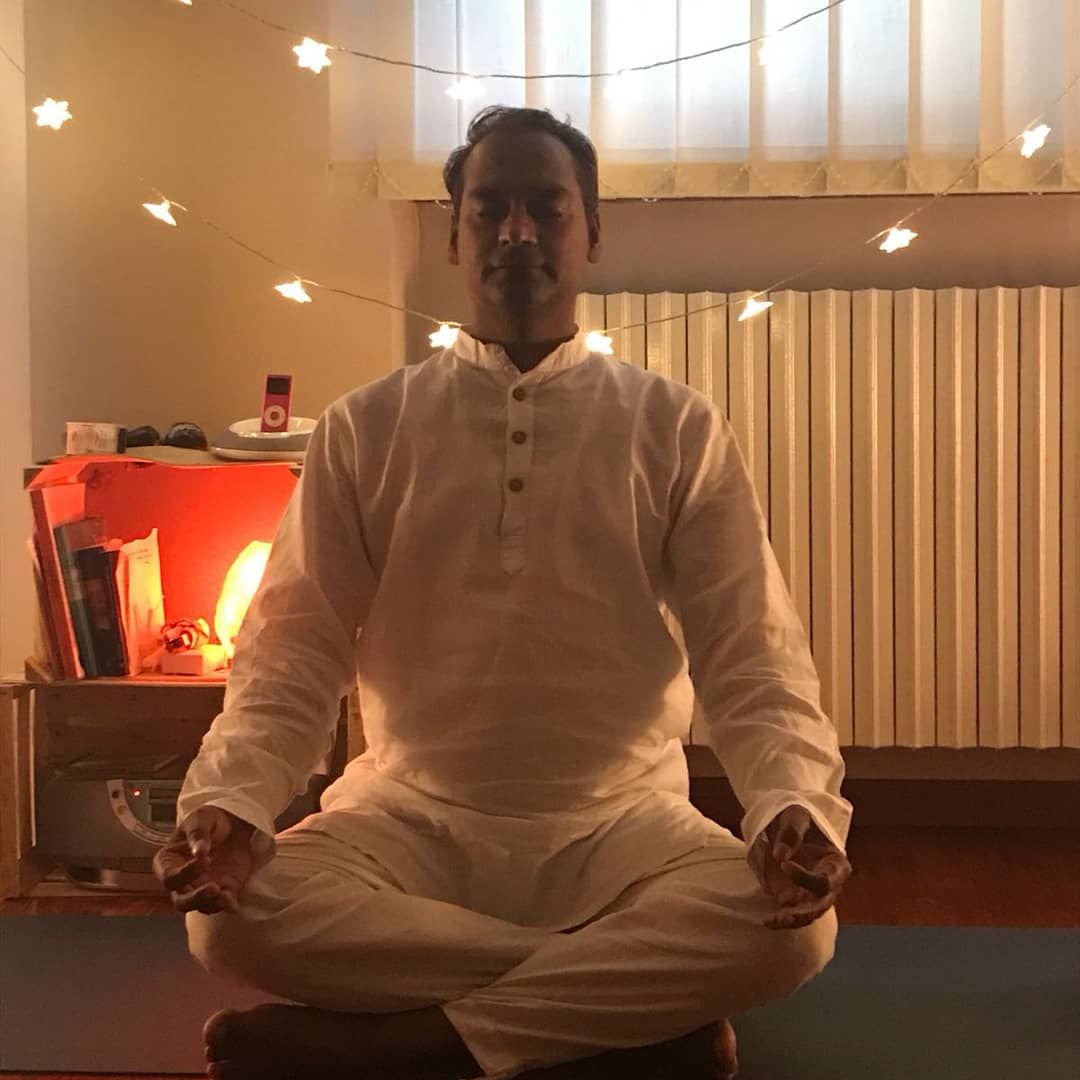
  • Siddhasana for grounding and stability
  • Jalandhara Bandha to settle prana
  • Ashwini Mudra for pelvic awareness
  • Yoni Mudra for sense withdrawal
  • Ujjayi breathing with spinal awareness
  • Soham mantra with Ajapa Japa
  • Deep rest for integration


The emphasis was not on doing more, but on allowing Shakti to work.


Key Takeaways: Kundalini for Inner Healing

  • Kundalini awakening is not a future event — it is available here and now
  • Kundalini is a natural healing process, not something to force
  • Inner healing and awakening are not separate
  • Breath awareness is the key to calming the mind and balancing prana
  • True Kundalini awakening brings calm, clarity, and stability
  • Healing happens when effort drops and trust in Shakti begins

Conclusion

One of the most important aspects of Kundalini for inner healing is letting go of doership. Kundalini does not awaken through effort or control — it unfolds through trust and relaxation. When effort drops:


  • The body relaxes
  • The breath softens
  • Awareness deepens
  • Healing integrates naturally

In this state, Shakti knows what is needed and works intelligently within us. Kundalini is not something to awaken. It is something to trust. When the body is relaxed, the breath is balanced, and the mind is quiet, Shakti unfolds on its own. There is no need to push, force, or chase experiences. Inner healing is not a step before awakening.Inner healing is the awakening.


For a deeper and clearer understanding of Kundalini from a classical yogic perspective, we invite you to watch this short talk by Sunil Sharma, where he answers common questions and misconceptions around Kundalini awakening.


FAQ's


  • 1. What is Kundalini awakening and is it real?

    Yes, Kundalini awakening is real, but it is often misunderstood.


    In classical yoga, Kundalini awakening is not a dramatic event. It is a gradual inner process of healing, balance, and expanded awareness. It happens naturally when the body, breath, and mind become stable and relaxed.

  • 2. Is Kundalini awakening dangerous?

    Kundalini awakening is not dangerous when approached in a classical, balanced way. Problems arise when practices are forced without preparation, grounding, or guidance. According to yoga, true Kundalini awakening brings calmness, clarity, and stability, not fear or disturbance.

  • 3. What are the real signs of Kundalini awakening?

    From a classical yogic perspective, safe signs of Kundalini awakening include:


    • Inner calm and mental clarity
    • Reduced anxiety and emotional reactivity
    • Deeper awareness of breath and body
    • Natural interest in silence or meditation
    • Feeling more grounded and present

    Extreme physical or emotional disturbances are not considered true Kundalini awakening in classical yoga.

  • 4. How long does Kundalini awakening take?

    There is no fixed timeline. Kundalini awakening is not a one-time event, but an ongoing process that unfolds gradually. It depends on lifestyle, emotional health, breath awareness, and inner readiness. Yoga teaches patience — awakening happens when the system is ready, not when it is forced.

  • 5. How can I support Kundalini awakening safely?

    The safest way to support Kundalini awakening is through:


    • Gentle breath awareness
    • Pranayama practiced with relaxation
    • Calming the nervous system
    • Resolving inner conflicts
    • Living a balanced, grounded life
New Paragraph

Discover More Articles


July 8, 2026
Learn the meaning of Soham meditation, the natural mantra of breath. Discover how Soham mantra meditation supports inner peace, self-awareness, stress relief, and daily yoga practice.
By Sunil Sharma June 25, 2026
Understand how ego often hides insecurity, fear, and inner resistance. Learn a gentle healing approach through acceptance, softness, self-awareness, and emotional transformation.
May 11, 2026
Discover mudras in Hatha Yoga, their meaning, benefits, and how they work to balance energy, calm the mind, and support inner healing.
March 6, 2026
Rishikesh is often called the Yoga Capital of the World, and every year thousands of people travel here to explore yoga, meditation, and traditional spiritual practices. For many seekers, the journey to Rishikesh is not only about learning yoga techniques but also about discovering a deeper connection with themselves. Among the many yogic practices taught here, pranayama holds a very special place. Pranayama is the art of working with the breath to balance the body, calm the mind, and cultivate awareness. For this reason, many students travel to India specifically to experience a pranayama retreat in Rishikesh, where the practice can be learned in its traditional setting. Recently, a travel and wellness blog shared an honest review of the Yoganga Healing 10-Day Pranayama Healing Retreat in Rishikesh, describing the experience of learning breath awareness in a calm and supportive environment dedicated to classical yoga. You can read the original review here: https://orchids-to-olives.com/10-day-pranayama-retreat-in-rishikesh-india-honest-review-of-yoganga-healing/ In this article, we would like to share a simple overview of what participants often experience during the Yoganga Healing Pranayama Healing Retreat, and reflect on the journey described in that review.
February 13, 2026
Today, many people feel stressed, overwhelmed, or emotionally tired — even when life seems normal from outside. You may have work. You may have family. You may have stability. Yet something inside feels restless. In yoga, this is often understood as disconnection from ourselves . When the body and mind are in rhythm, life feels natural and easy. When they are disconnected, life feels heavy and complicated. You may notice: You are tired but cannot sleep. You are resting but cannot relax. You are successful but not fulfilled. This is not a failure. This is simply a signal — calling you back to yourself. Self-awareness is the bridge that reconnects body, mind, and inner being. Not through force. Not through analysis. But through direct experience. What is Self-Awareness? (Simple Meaning) Self-awareness means noticing: What you feel in the body What emotions are present What thoughts are running How you react to situations It is simply being present with yourself . In yoga, self-awareness is considered the foundation of healing. Because you cannot release what you do not notice. You cannot transform what you are not aware of. Self-awareness is not something you learn intellectually. It is something you experience through the body, breath, and presence. Why Many People Lose Self-Awareness Modern life keeps us in constant mental activity. Thinking about: Future, Past, Expectations, Responsibilities, Social comparison, Performance pressure. Slowly, we start living more in the mind and less in the body. When this happens, we stop listening to signals like: Fatigue Emotional discomfort Body tension Shallow breathing Restlessness This creates: Chronic stress Emotional overload Anxiety patterns Poor sleep Tension stored in body Yoga says something very simple and very powerful: Relaxation is your natural state. Stress is something that comes and goes. But relaxation is built into your nervous system.Self-awareness helps you return to this natural state. Not by forcing relaxation. But by removing what blocks it. Understanding Consciousness: The Three Levels of Awareness To understand self-awareness deeper, yoga looks at consciousness in layers. 1️⃣ Reactive Awareness (Automatic Survival Mode) This is where reactions happen automatically. Example: Seeing a snake photo → body reacts like real danger. This layer is helpful for survival. But if we live only here, life becomes reactive and stressful. In this state: We react before understanding. We feel before observing. We act before thinking clearly. 2️⃣ Peripheral Awareness (The Space of Transformation) This is the most important space for emotional healing. Here you can: Notice reactions Observe emotions Feel body signals Pause before reacting There is a tiny gap between impulse and action. That tiny gap is freedom. Inside this gap: You can choose response over reaction. You can understand instead of suppressing. You can release stress instead of storing stress. Yoga practices help expand this gap. 3️⃣ Integrated Awareness (Higher Consciousness State) Here we experience: Clarity Intuition Creativity Inner stability This is where spiritual growth naturally begins. Not as something mystical — but as something deeply natural. How Yoga Helps Develop Self-Awareness
January 9, 2026
In Yoganga Healing, relaxation is not considered a luxury. It is not something extra, and it is not something to be earned. Relaxation is the doorway to healing. Over years of guiding people, listening to their life stories, and witnessing their inner struggles, one truth has become very clear to Sunil Sharma: As long as we remain contracted inside, healing cannot begin. When we relax, things naturally start falling into place. This understanding did not come from theory. It came from direct experience — again and again — watching how the body, the breath, and the inner world respond the moment a person softens. What Is Relaxation? (And Why It Is Not What We Think) Most people think relaxation means resting, sleeping, taking a break, or distracting themselves. But from a healing perspective, this is not true relaxation. Relaxation is not an activity. It is not entertainment. It is not an escape. Relaxation is a state of the body. It is the state where the body is no longer holding tension, the breath becomes natural, and the nervous system feels safe. In this state, the system is no longer in defence. Sunil ji has observed again and again that healing does not begin through thinking or talking – it begins when the body relaxes. As long as we remain tight and contracted inside, healing cannot start. But the moment we soften, even a little, the system becomes open and receptive. This is why relaxation is not something we need to achieve. It is something we need to allow. The body already knows how to relax. We only need to stop holding. Why Relaxation Is Important for Healing Healing cannot begin when the body is in a state of contraction. When we are tense, tight, and holding inside, the system is in protection mode. In this state, the body is focused on survival, not healing. When a person starts to relax, things begin to move in the right direction naturally. This does not mean problems disappear, but the system becomes open and responsive. The body becomes available for healing. As long as we remain contracted, nothing can change. But when the body softens, even a little, something shifts. The breath deepens. The nervous system settles. The inner space opens. This is why relaxation is not optional in healing. It is the starting point. Without relaxation, healing cannot happen. With relaxation, healing naturally begins. Relaxation and the Nervous System Healing is not something we force; it is something we allow. When the body enters a relaxed state, it activates the parasympathetic nervous system , which signals safety and opens the inner pathways of restoration. When we relax, the body naturally shifts into healing mode. This is what begins to happen: The breath deepens and begins to move with a natural rhythm, bringing calmness into every part of the body. Stress hormones reduce , giving the nervous system space to settle and restore balance. Prana starts flowing more freely , nourishing the inner pathways that were blocked by tension. The muscles soften , releasing the tightness we often hold without awareness. Emotions settle naturally , allowing us to feel without overwhelm. The mind becomes spacious , clear, and open — no longer squeezed by constant thinking. Practices like Pranayama and Yoga Nidra help us access this healing space. You can learn more about our offerings: Pranayama Healing Retreat and Yoga Nidra Healing Retreat Relaxation for Anxiety, Sleep & Emotional Healing Anxiety is not only in the mind. It is held in the body. This is why thinking or analysing rarely resolves anxiety. Sunil ji explains that as the body feels safe, the breath softens and the nervous system settles. The same is true for sleep. Many people cannot sleep because they are still holding the day inside. When the body relaxes, sleep comes naturally. Relaxation is not a technique. It is the condition that allows balance to return. Here’s how relaxation supports healing: Emotional Healing: When the body feels safe, emotions naturally loosen and move. Tears, warmth, and subtle waves of feeling rise gently and settle on their own. Nothing needs to be forced — the body releases at its own pace. Better Sleep: Relaxation quiets the nervous system, making it easier to fall asleep and enter deeper rest. You wake up feeling clearer, lighter, and more restored. Reduced Anxiety & Stress: As the breath becomes softer, the fight-or-flight response switches off. Worry, tightness, and inner pressure begin to melt, creating a sense of ease inside. Improved Digestion: A relaxed body activates the healing mode where digestion improves, inflammation reduces, and the internal organs function more smoothly. Clarity of Mind: Relaxation clears the fog of constant thinking. Thoughts become simpler, more organised, and spacious. You can see situations with more understanding and make decisions with ease. A Lighter, Open Heart: When the body relaxes, the chest naturally softens. You feel more connected, compassionate, and available to yourself and others. The heart shifts from tension to openness. Relaxation is not an escape from life; it is a return to life with greater presence and clarity. Simple Relaxation Practices You Can Start Today Here are a few simple relaxation practices you can start today: 1. Soft Belly Breathing Place one hand on your belly. Inhale gently… exhale slowly… Let your belly soften with each breath. This simple movement tells your body, “You are safe.” 2. Whole Body Exhale Take a slow, long exhale and imagine the whole body melting downward. With each out-breath, feel your shoulders, face, and chest letting go a little more. This helps release hidden tension from the body. 3. Yoga Nidra Lie down comfortably. Relax your feet, legs, belly, chest, arms, and face one by one. Give your whole body permission to rest. Try a short guided Yoga Nidra here: https://youtu.be/WgnKIwQKROY?si=OTEuXJlt2wPqrT1L 4. Breath-Pause Awareness Take a soft breath in… Exhale gently… Pause for a moment. Feel the quiet stillness in that pause. This tiny gap helps the mind slow down and settle. If your heart wishes to go deeper, we offer gentle one-to-one sessions to support your healing journey. https://www.yogangahealing.com/one-to-one-sessions Conclusion: Relaxation Is Your True Nature Relaxation is your natural state. When the body softens and the breath becomes gentle, the system feels safe to settle and healing begins. We do not need to push or force ourselves to heal. When we give the body space, it knows how to return to balance. Healing is not a dramatic moment. It is a quiet return to ease. As we learn to relax, we reconnect with our natural rhythm and begin to live with more presence and clarity. FAQs

Ready to Begin Your Healing Journey?

Discover Peace—Spaces Fill Quickly, So Reserve Today