
Soham Meditation: Meaning, Benefits, and How to Practice the Natural Mantra of Breath
July 8, 2026
Introduction: Living Yoga Beyond the Mat
Yoga is not only something we practice on one special day, in one class, or for one photograph. The deeper purpose of yoga is to bring awareness, balance, and inner peace into daily life. To live yoga means to observe our behaviour, our attitude, our emotions, and the way we respond to life. It does not mean becoming rigid, serious, or perfect. It means becoming more natural, more present, and more connected with the truth within.
Again and again, we can ask ourselves:
Am I living my yoga?
This simple question can become a powerful meditation in itself.
One of the most natural and beautiful yogic meditation practices for returning to awareness is Soham meditation, also known as Soham mantra meditation or the natural mantra of the breath.
With inhalation, there is
So.
With exhalation, there is
Ham.
Together, Soham means:
I am That.
What Is Soham Meditation?
Soham meditation is a simple yet profound breath awareness meditation rooted in the yogic tradition. It uses the natural sound and rhythm of the breath as a mantra. Unlike loud chanting or complicated meditation techniques, Soham mantra meditation is practiced silently. The practitioner simply observes the natural breath and mentally connects inhalation with So and exhalation with Ham.
This makes Soham meditation suitable for beginners, regular yoga practitioners, and anyone looking for a simple meditation practice for stress relief, emotional balance, and inner awareness. Soham is not something we create. It is already happening with the breath. Our practice is only to become aware of it.
What Does Soham Mean?
The Sanskrit mantra Soham means “I am That.”
This meaning points toward the deeper yogic understanding that our true nature is not limited to the body, mind, emotions, personality, or social roles.
In daily life, we often identify ourselves with many roles — our profession, relationships, body, personality, and personal story.
These roles are part of life. We do not need to reject them or escape from them. We have responsibilities, relationships, and duties to fulfil.
But when we become completely identified with these roles, we forget the deeper presence within us. Soham meditation reminds us of what we are before all roles. Before any name, identity, duty, or story was given to us, there was awareness. There was presence. There was life. Soham brings us back to that inner space.
It reminds us:
I am connected with the larger life.
I am not separate from existence.
I am not only this thought, emotion, role, or identity.
I am awareness.
I am consciousness.
I am that sacred presence within.
Soham Mantra and the Breath
Soham is often called the natural mantra of breath because it is connected with the natural movement of inhalation and exhalation.
As the breath comes in, we become aware of
So.
As the breath goes out, we become aware of
Ham.
This is why Soham meditation is also connected with Ajapa Japa, the effortless repetition of mantra that continues naturally with the breath.
There is no need to force the mantra.
There is no need to control the breath.
There is no need to create a special experience.
The breath is already moving. The mantra is already present. Awareness is already available. When we sit quietly and observe the breath, Soham becomes an anchor. It brings the wandering mind back to the present moment and helps us rest in inner stillness.
Benefits of Soham Meditation
The mind is naturally active. It moves from one thought to another, from past to future, from memory to imagination, from worry to planning. This movement is not a problem. It is the nature of the mind. The purpose of Soham meditation is not to fight with the mind.
The purpose is to gently return:
Return to the breath · Return to the body · Return to the present moment · Return to Soham
Regular practice of Soham mantra meditation may support:
- Calmness of the mind
- Breath awareness
- Emotional balance
- Stress relief
- Better self-awareness
- Inner peace
- Meditation focus
- Nervous system relaxation
- Connection with the heart space
- A deeper experience of yoga in daily life
Whenever the mind feels heavy, emotions become strong, or life feels overwhelming, come back to the simplest anchor within you — the natural breath. With each inhalation, silently feel So; with each exhalation, softly return to Ham.
Slowly, this simple yogic meditation practice creates space inside. It helps us witness thoughts and emotions without being completely carried away by them.
How to Practice Soham Meditation
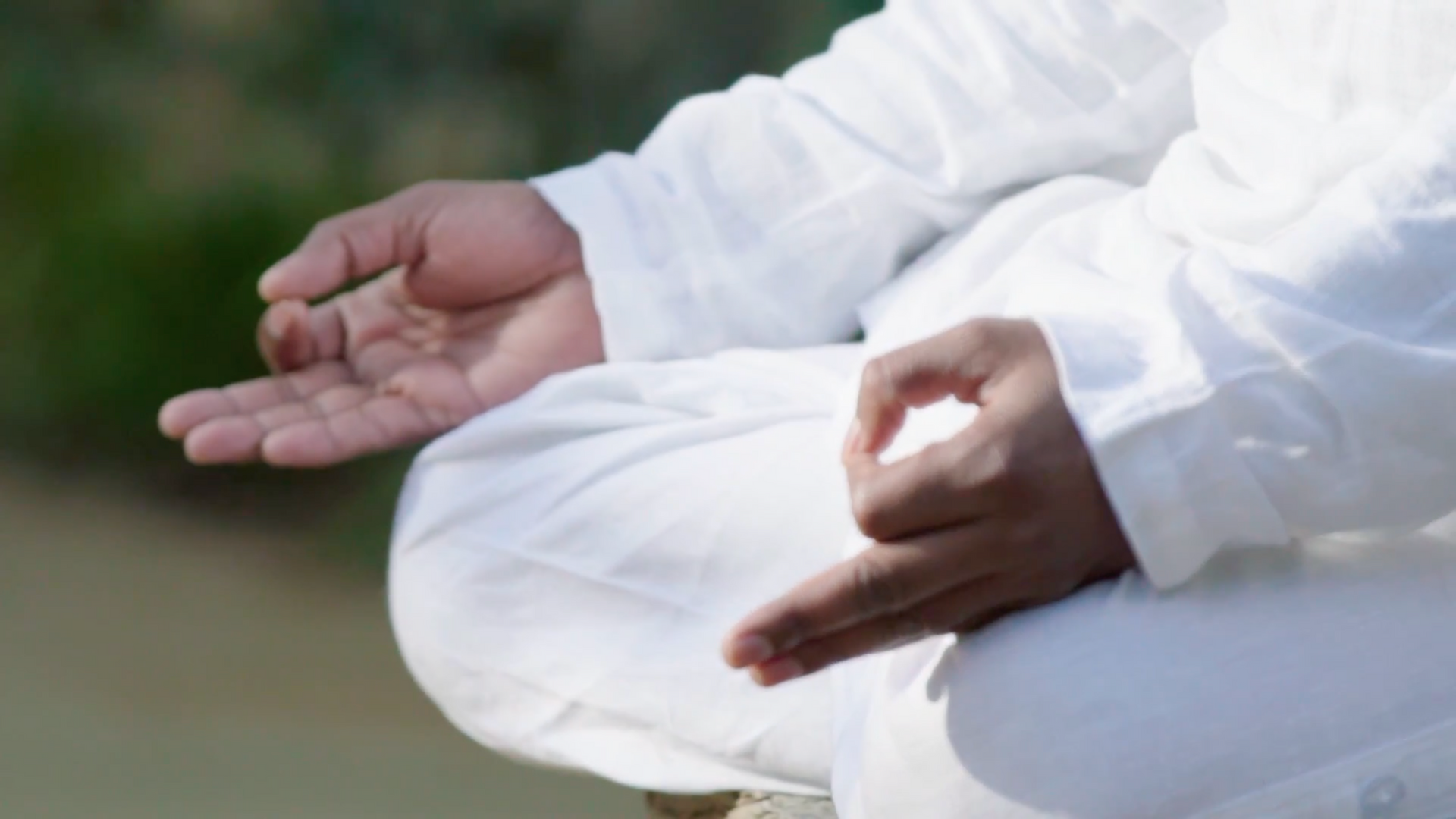
To practice Soham meditation, sit in a comfortable position. You may sit cross-legged on the floor, in a meditative posture, or on a chair.
Let the spine be naturally upright. Keep the body stable but not stiff. Allow the shoulders to soften. Relax the face, forehead, eyes, jaw, and tongue.
Feel the support of the ground, cushion, or chair beneath you.

Now bring your awareness to the natural breath. Do not try to make the breath deeper or slower. Let the breath move in its own rhythm.
Observe the breath at the nostrils.
Feel the coolness of the inhalation.
Feel the softness of the exhalation.
As you inhale, silently feel: So
As you exhale, silently feel: Ham
Continue gently.
If the mind wanders, do not become disturbed. Wandering is the nature of the mind. Simply notice it and return.
Return to the breath · Return to the body · Return to Soham · Return to this moment
After some time, bring your awareness to the heart space, the inner center of the chest.
Inhale into the heart:
So
Exhale from the heart:
Ham
Let the breath touch the heart space. Let the mantra become soft, natural, and subtle.There is nothing to achieve.
Nothing to force.
Nothing to prove.
Just sit, breathe, listen, and remember.
Soham Meditation for Stress and Emotional Balance
Soham meditation can be especially helpful when the mind feels heavy, restless, anxious, or emotionally disturbed.
In difficult moments, we often become lost in thoughts and reactions. The breath becomes shallow, the body becomes tense, and the mind begins to move faster.
Soham brings us back to something simple and steady.
The breath comes in.
The breath goes out.
So.
Ham.
This simple awareness helps us reconnect with the present moment. It allows the nervous system to soften and gives the mind a gentle point of focus.
Soham meditation does not suppress emotions. It gives us a space to witness them. Through breath awareness and mantra meditation, we learn to remain present with what is happening without becoming completely identified with it.
Soham as a Practice of Inner Remembrance
Soham meditation is not only a relaxation technique. It is a practice of inner remembrance.
It reminds us that we are not only the body.
We are not only the mind.
We are not only our thoughts.
We are not only our emotions.
We are not only the roles we play in life.
The body changes.
Thoughts change.
Emotions change.
Roles change.
Situations change.
But awareness remains.
In meditation, we begin to see that we are the witness of the body, breath, thoughts, and emotions. Everything arises and passes away, but the witnessing presence remains silent and steady.
Soham brings us closer to this understanding.
It reminds us that the same breath moving through us is moving through all beings. The same life is present in all. The same silence is within all.
This remembrance softens separation and brings us back to wholeness.
Bringing Soham Meditation Into Daily Life
The beauty of Soham meditation is that it does not end when formal meditation ends.
You can return to Soham anytime.
Before starting your day.
Before sleep.
During stress.
During emotional heaviness.
Before an important conversation.
When the mind feels restless.
When the heart feels heavy.
When you need to come back to yourself.
The breath is always available.
The mantra is always present.
The inner space is always open.
This is how Soham becomes part of daily yoga practice.
It helps us live yoga, not only practice yoga.
Final Reflection
Soham is a simple and powerful reminder:
We do not need to escape from our roles.
We do not need to reject life.
We do not need to become someone else.
We only need to remember the deeper presence that is already within us.
With every inhalation:
So
With every exhalation:
Ham
I am That.
I am connected with life.
I am held by the breath.
I can return to myself, again and again.
At Yoganga Healing and Soham Retreat, this spirit of practice continues through meditation, pranayama, yoga nidra, and healing retreats in Rishikesh. You are warmly invited to come, practice, breathe, and return to the quiet presence within.
FAQ's
1. What is Soham meditation?
Soham meditation is a simple yogic meditation practice connected with the natural breath. During inhalation, we silently become aware of “So,” and during exhalation, we silently become aware of “Ham.” This breath awareness meditation helps calm the mind and bring awareness back to the present moment.
2. What does Soham mean?
Soham means “I am That.” In yoga and meditation, it points to the deeper understanding that our true nature is not limited to the body, mind, emotions, or social roles. Soham reminds us of our connection with consciousness, life, and the sacred presence within.
3. How do I practice Soham mantra meditation?
Sit comfortably with the spine upright. Relax the body and observe the natural breath. As you inhale, silently feel “So.” As you exhale, silently feel “Ham.” Do not force the breath. If the mind wanders, gently return to the breath and the mantra.
4. What are the benefits of Soham meditation?
Soham meditation can help calm the mind, support stress relief, improve breath awareness, create emotional balance, deepen self-awareness, and bring inner peace. It is especially helpful when the mind feels heavy, scattered, anxious, or overwhelmed.
5. Is Soham meditation suitable for beginners?
Yes, Soham meditation is suitable for beginners. It does not require complex techniques, advanced yoga experience, or long practice hours. Because it is based on natural breathing, anyone can begin with a few quiet minutes each day and slowly deepen the practice.
New Paragraph
Discover More Articles


Ready to Begin Your Healing Journey?
Discover Peace—Spaces Fill Quickly, So Reserve Today