
Yoga as the Evolution of Consciousness Part I
October 1, 2026
Understanding awareness, inner growth and the deeper purpose of yoga.
When we think of yoga, we often think of physical postures, breathing exercises or meditation. These practices are important, but the deeper purpose of yoga goes far beyond the physical body. Yoga is also a journey of understanding ourselves and becoming more aware of how we think, feel and respond to life.
Much of our daily life is influenced by habits, emotions, expectations and past experiences. We often react to situations without understanding why. Through yoga, we begin to recognise these patterns and gradually develop the ability to respond with greater awareness.
This inner development is one way to understand yoga as the evolution of consciousness.
It does not necessarily involve extraordinary spiritual experiences or unusual states of mind. It can be something much simpler: becoming more aware of ourselves and learning to live with greater clarity, understanding and inner balance.
What Is Consciousness in Yoga?
Consciousness is a subject explored in both philosophy and science. In yoga, we can begin with a simple and practical understanding: consciousness is our capacity to be aware of our experiences, recognise what is happening within us and around us, and choose how we relate to those experiences.
For example, imagine someone says something that makes you angry. Usually, the anger appears quickly, and you may react immediately. You might raise your voice, become defensive or say something you later regret.
But another possibility exists. You may recognise that you are becoming angry and begin to question your reaction. Why is this situation affecting you so strongly? Do you really need to respond immediately? Could you approach the situation differently?
This ability to observe our own thoughts and emotions creates the possibility of conscious choice. Instead of being completely carried away by our reactions, we begin to see them more clearly.
It is an important aspect of the yogic journey.
Why Do We Live So Much of Our Lives Automatically?
We all develop habits through our experiences, upbringing, relationships and environment. Some habits are helpful, while others may create difficulties in our lives.
Over time, certain situations begin to produce familiar reactions. Criticism may immediately make us defensive. Uncertainty may create anxiety. A disagreement may make us angry, while praise may make us feel important. Often, these reactions happen so quickly that we do not question them. They become part of how we understand ourselves. We may even say, "This is just how I am."
In yoga philosophy, the impressions created by our past experiences and repeated actions are known as samskaras. These impressions can influence our thoughts, emotions and behaviour, often without our conscious awareness. When we repeatedly respond to situations in the same way, these patterns can become stronger. What begins as a single reaction may eventually become a deeply established habit.
Yoga encourages us to become aware of this conditioning. When we begin to recognise our habitual reactions, we also discover that we do not always have to follow them. This is where the movement from automatic living towards conscious living begins.
The Evolution of Consciousness: From Reaction to Awareness
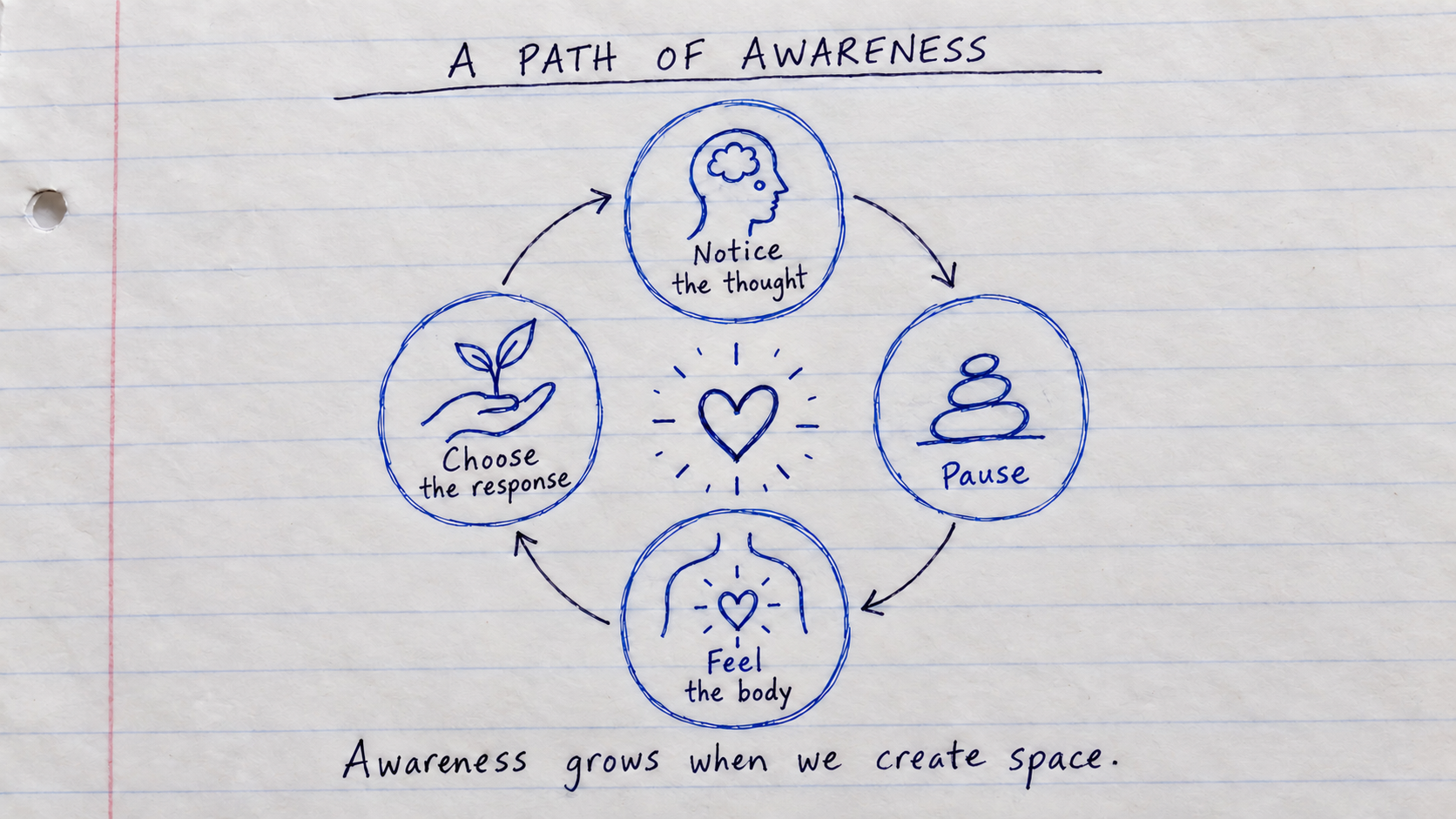
The evolution of consciousness can be understood as a gradual movement from unconscious habits towards greater awareness, from automatic reactions towards conscious choices, and from confusion towards clearer understanding.
Imagine you are stuck in traffic and running late. As time passes, you begin to feel irritated. Your body becomes tense, your breathing changes and your mind starts imagining everything that might go wrong. Normally, this frustration may continue to grow and affect the rest of your day.
But suppose you recognise what is happening. You notice your impatience, become aware of your physical tension and understand that becoming angry will not change the traffic. The situation remains the same, but your relationship with it begins to change.
You now have the possibility of choosing how to respond instead of allowing frustration to control your behaviour. This is a simple example of growing awareness. The evolution of consciousness is not necessarily about changing everything happening around us. It is also about changing how we experience and respond to what happens.
Viveka: Developing the Ability to See Clearly
Yoga philosophy gives great importance to viveka, which means discernment or the ability to see clearly.
Throughout the day, we experience countless thoughts, emotions and desires. Sometimes we make decisions based on temporary feelings without considering their deeper consequences.
We may react strongly to something that later seems unimportant. We may pursue something because we believe it will make us happy, only to discover that the satisfaction is temporary.
Viveka helps us develop the ability to look beyond our immediate reactions and understand what is genuinely helpful.
As awareness grows, we begin to recognise the difference between an impulse and a thoughtful response, between temporary pleasure and lasting wellbeing, and between our habitual conditioning and conscious understanding.
This clarity does not develop overnight. It grows gradually through experience, self-observation and reflection.
With greater discernment, we become less dependent on every passing thought or emotion. We begin to make decisions based on a clearer understanding of ourselves and our circumstances.
From Separation to Connection
Another important aspect of the evolution of consciousness is the way we understand ourselves in relation to others.
Much of our identity is built around our roles, achievements, relationships, possessions and personal beliefs. These are all part of our lives, but when we become completely identified with them, we may find it difficult to accept change or understand perspectives different from our own.
Yoga encourages us to look beyond these limited identities and explore a deeper understanding of ourselves. As our self-awareness grows, we may also become more understanding towards others. We begin to recognise that everyone carries their own fears, expectations, difficulties and experiences.
Someone who behaves impatiently may be struggling with something we cannot see. Someone who disagrees with us may be looking at life through a completely different set of experiences. This understanding can gradually create greater compassion, patience and connection.
Instead of seeing life only through our personal likes, dislikes and expectations, we begin to develop a wider perspective.
The journey from separation towards connection is therefore not about losing our individuality. It is about developing a more balanced relationship with ourselves, other people and the world around us.
Spiritual Growth Does Not Mean Perfection
When we speak about the evolution of consciousness, it is easy to imagine a spiritually developed person who never becomes angry, anxious, sad or confused. But spiritual growth does not mean becoming perfect or eliminating every difficult emotion.
It means becoming more aware of our experiences and recognising how we respond to them. We may still become angry, but perhaps we recognise the anger more quickly. We may still experience fear, but perhaps we understand it better. We may still repeat old habits, but now we are beginning to see them clearly.
These may seem like small changes, but they are meaningful steps in our inner development. The journey of yoga is gradual. There will be times when we feel peaceful and balanced, and other times when old patterns return. Every experience gives us another opportunity to understand ourselves.
The purpose is not to judge how spiritually advanced we are, but to continue developing awareness, clarity and understanding.
The Deeper Purpose of Yoga
The evolution of consciousness is not simply about gaining more knowledge or having extraordinary experiences. It is about allowing our understanding to become part of the way we live. As awareness develops, we may begin to notice greater harmony between what we understand, what we value, what we say and what we do.
We may become more patient in difficult situations, more understanding in our relationships and more conscious of the choices we make. This is why yoga is much more than a physical practice. Its deeper purpose is to help us move from unconscious habits towards conscious living, from confusion towards clarity, and from a fragmented sense of identity towards greater inner wholeness.
The journey of yoga is not about becoming someone extraordinary. It is about becoming more conscious in the ordinary moments of life.
Continue Your Journey: How Yoga Develops Self-Awareness
Understanding consciousness is the beginning of the journey. The next step is learning how to develop awareness through practice.
In the second part of this series, How Yoga Develops Self-Awareness, we will explore how asana, pranayama, meditation and Yoga Nidra help us observe our body, breath, thoughts and emotions, and gradually bring greater awareness into everyday life.
At Yoganga Healing, we bring together yoga philosophy and practical experience through our yoga and healing courses, retreats and online programs.
Whether you are beginning your yoga journey or wish to deepen your existing practice, you are welcome to explore our offerings.
Explore Our Yoga and Healing Courses
FAQ's
What does consciousness mean in yoga?
In yoga, consciousness can be understood as our capacity to be aware of our thoughts, emotions, sensations and experiences. Developing awareness helps us observe our habitual reactions and respond to life with greater clarity.
What is the evolution of consciousness?
The evolution of consciousness refers to the gradual development of awareness, discernment and conscious choice. In the context of yoga, it describes an inner journey from unconscious habits and automatic reactions towards greater understanding and inner harmony.
What is the difference between consciousness and self-awareness?
Consciousness is a broad term referring to the capacity for experience and awareness. Self-awareness is our ability to recognise and understand our own thoughts, emotions, habits and behaviour. Developing self-awareness is an important aspect of the yogic journey.
What is the role of Viveka in yoga?
Viveka means discernment or clear understanding. It helps us distinguish between habitual reactions and conscious choices, temporary emotions and deeper understanding, and actions that support our wellbeing and those that may create unnecessary difficulties.
Does spiritual growth mean becoming free from negative emotions?
No. Spiritual growth does not mean that we will never experience anger, fear, sadness or anxiety. It involves developing greater awareness of these experiences and learning to respond to them with more clarity and understanding.
New Paragraph
Discover More Articles


Ready to Begin Your Healing Journey?
Discover Peace—Spaces Fill Quickly, So Reserve Today